Faculty of Health Sciences (FHS): Recent submissions
Now showing items 8561-8580 of 10418
-
The mitogenic response of cryopreserved human lymphocytes in a microculture system
(Department of Surgery, University of Nairobi, 1977)Fresh blood lymphocytes from nine health donors have been compared with samples from the same donors, recovered after period of 2 to 21 months storage in liquid nitrogen, for the capacity to respond to a range of mitogens ... -
Neonatal bacterial meningitis at the newborn unit of Kenyatta National Hospital
(Department of paediatrics, University of Nairobi, 2003-09)Background: Meningitis occurs in up to one third of neonates with septicaemia. Diagnosis is difficult due to its non-specificity of signs and symptoms. While neonatal septicaemia is a common problem at Kenyatta National ... -
Surgical manpower in Africa
(Department of Surgery, University of Nairobi, 1987-06)There is a marked shortage of surgical manpower all over Africa. General surgeons undertake a very wide range of surgical work because of the lack of specialists. Orthopaedic and general surgeons both care for accident ... -
Open simple prostatectomy and blood transfusion in Nairobi
(Department of Surgery, University of Nairobi, 2007-09)BACKGROUND: Open simple prostatectomy has long been associated with large blood losses; hence allogeneic blood transfusion in this procedure is a standard practice world over. A review of literature suggests significant ... -
Histology of specimens taken by prostatectomy and needle biopsy.
(Department of Surgery, University of Nairobi, 2007-08)OBJECTIVES: To determine the histology of the prostate in prostatectomy done for benign prostatic hypertrology (BPH), and prostate needle biopsy done for raised prostatic specific antigen (PSA). DESIGN: A ... -
Biometry in cataract camps. Experiences from north Kenya
(Department of Opthalmology, University of Nairobi, 2010-04)BACKGROUND: Biometry has the potential to improve refractive outcomes of cataract surgery in developing countries. However, the procedure is difficult to carry out in remote areas. PATIENTS AND METHODS: The ... -
A Retrospective Study of Childhood Poisoning in Kenya
(1993)A literature survey revealed lack of adequate information on poisoning in Kenya, thus providing the impetus for the present work. In this, study, a 3 year retrospective survey of human poisoning in 19 Kenyan District, ... -
Comparative Examination of Two Zanthoxylum Benzophenanthridine Alkaloids for Cardiovascular Effects in Rabbits
(1989)Cardiovascular activities of nitidine chloride from Zanthoxylunt chalybeum have been compared with those of 9-methoxychelerythrine. Whereas nitidinc chloride was found to show significant hypotensive activity in rabbits, ... -
Khat-induced paranoid psychosis
(Department of Pharmacy, University of Nairobi, 1988) -
Battered baby syndrome at Kenyatta National Hospital
(Department of paediatrics, University of Nairobi, 1990-12)Thirty children presenting with Battered Baby Syndrome over a five year period were studied retrospectively. The male:female ratio was 1:1.1. The majority (60%) were aged 0-11 months. 14 children (46%) were abandoned while ... -
Ages of eruption of the permanent teeth in Kenyan African and asian children.
(Department of Human Anatomy, University of Nairobi, 1981)Mean ages of eruption of the permanent teeth (except 3rd molars) in African and Asian children were derived from a cross-sectional study of 2847 children aged 4-14 years, in selected nursery and primary schools in Nairobi, ... -
Estimation of calendar age from eruption times of permanent teeth in Kenyan Africans and Asians
(Department of Human Anatomy, University of Nairobi, 1982)Eruption data for permanent teeth, obtained from a previous cross-sectional study of 2847 African and Asian school children aged 4-14 years in Nairobi, Kenya, were used to calculate the median age and the 10th-90th percentile ... -
The third permanent molar eruption in Kenyan Africans and Asians.
(Department of Human Anatomy, University of Nairobi, 1985)Data on third permanent molar eruption was obtained from a cross-sectional study of 1343 African and 1092 Asian students aged 13-23 years attending various schools in Nairobi and the University of Nairobi, Kenya. Africans ... -
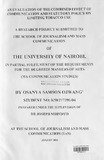
An evaluation of the combined effect of Communication and statutory policy
(School of journalism and mass communication, 2008)The objectives of the study were to establish the impact of Information, Education and Communication in reducing the abuse of tobacco; determine the impact of regulatory control on smoking behaviour of Nairobi residents; ... -
Report on two aspects of the Maasai dentition
(Department of Human Anatomy, University of Nairobi, 1988) -
Antimalarial activity of some plants traditionally used in Meru district of Kenya.
(2007)Ten plant extracts commonly used by the Meru community of Kenya were evaluated for the in vitro antiplasmodial, in vivo antimalarial, cytotoxicity and animal toxicity activities. The water and methanol extracts of Ludwigia ... -
Clinical report on longitudinal post-eruptive changes in fluorotic enamel observed in 10 cases over a 2 1/2 year period.
(Department of Dental Surgery, University of Nairobi, Kenya, 1990)The present longitudinal study was conducted on ten children from age 5-6 years to determine the post-eruptive enamel changes of fluorosed permanent incisors. The children were born and reared in an area of Kenya with a ... -
Biometric analysis of the mandibles of Papio anubis and Cercopithecus aethiops
(Department of Human Anatomy, University of Nairobi, 1991)Six biometric measurements were recorded from dry mandibles of 53 Papio anubis and 84 Cercopithecus aethiops: intercondylar width, intercoronoid width, intermolar width (IMW), mesiodistal width of the condyles, height of ... -
The position of mandibular and mental foramina in Kenyan African mandibles
(Kenya Medical Research Institute, Medical Research Centre, NairobiDepartment of Human Anatomy, University of Nairobi, 1992)Analysis of 79 adult African mandibles indicated that 64.6% of the mandibular foramina were located below the level of the posterior extension of the occlusal plane while 30.7% were located along this plane. 56.1% of the ...